
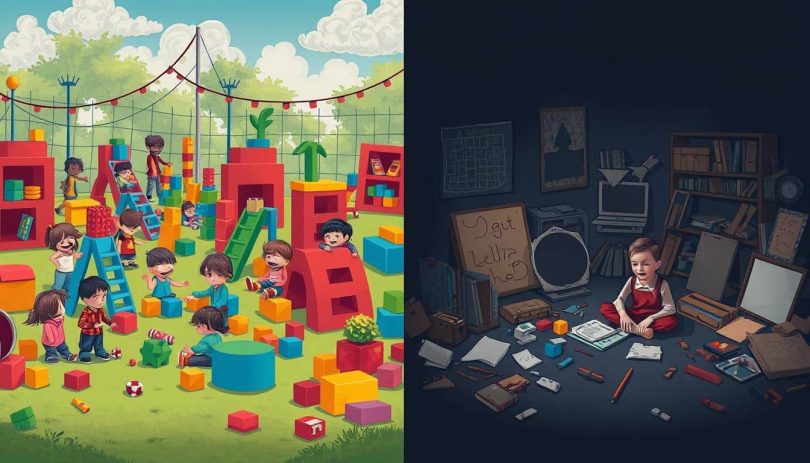

The concept of Industry vs Inferiority is a crucial stage in human psychological development that shapes how children view themselves and their abilities. Children at this stage start gaining confidence in their abilities based on school, social interactions, and attainments. Simultaneously, they can also have problems with a sense of failure or inadequacy when not supported and encouraged accordingly.
Understanding Industry vs Inferiority helps parents, educators, and caregivers recognize how early experiences influence long-term emotional health, self-esteem, and behavior patterns. This is a critical phase in the development of a child into a competent and confident adult, or instilling some sense of doubt and insecurity in the child.
This paper will address healthy and unhealthy signs of growth at this age and how proper guidance at an early age can create a significant difference.
Understanding Industry vs Inferiority
The Industry vs Inferiority stage is a key part of childhood development where children learn to apply themselves to tasks, develop new skills, and gain recognition for their efforts. Success at this stage creates a feeling of competence and pride, and failure or criticism can result in the feeling of inferiority.
Children start to compare themselves with other children, and this comparison will have a profound effect on their self-esteem. With the right help, they will cultivate a sense of their capabilities and readiness to undertake the challenges. But in case of lack of support, they can feel powerless or inferior to others.
Importance of Positive Reinforcement
Positive reinforcement plays a critical role in healthy development during the Industry vs Inferiority stage. Children are taught to be persistent and work hard when their efforts are applauded, not the outcomes.
The motivation will assist them in developing resilience and confidence. Even the slightest success may be a permanent effect if it is acknowledged. Conversely, unrealistic expectations or criticism at all times can demoralize and bring self-doubt.
Through constant support, the caregivers contribute to the formation of a high level of self-esteem and motivation in children.
Signs of Healthy Development in Industry vs Inferiority
Proper healthy development at this age is indicated in the behavior, attitude, and emotional reaction of the child. Children who are able to overcome this stage are likely to become confident and interested in learning new things.
They are more likely to:
- Be proactive in assignments and work in school
- Be persistent in the event of challenges
- Be proud of what they have achieved
- Learn to make healthy friends and work with others
- Take positive criticism and stay confident
These actions show that the child is developing a reputation of competence in a strong manner. They trust in their success, and that is the reason why they are willing to learn and develop.
Signs of Unhealthy Development in Industry vs Inferiority
Unhealthy development takes place when children always feel inadequate or unsupported. This may result in an unremitting feeling of inferiority, which will impact their emotional and social life.
Common signs include:
- Avoidance of challenging tasks due to fear of failure
- Low self-esteem and self-critical behavior
- Difficulty accepting praise or recognition
- Withdrawal from social or academic activities
- Excessive comparison with peers leads to discouragement
In most cases, when these signs occur, it is a signal that the child is unable to gain confidence in their abilities. These trends can progress to adolescence and adulthood without intervention.
Role of Parents and Caregivers
Parents and caregivers play a vital role in shaping how children experience the Industry vs Inferiority stage. The way they react to success and failure has a great impact on the self-perception of a child.
Caregivers should offer support, be patient and understanding to children, giving them the freedom to explore and to make mistakes. This creates an attitude of growth, with the challenges being regarded as learning opportunities.
On the other hand, criticism or neglect, especially harshness, may destroy self-esteem and produce lasting emotional blockages. Thus, the key to healthy development is the availability of regular emotional support.
Influence of Teachers and School Environment
Schools are a major environment where Industry vs Inferiority is developed. Inclusive learning environments, encouragement of participation, and attention to effort make children feel competent and appreciated by teachers.
When people have a positive school climate, they will feel encouraged to cooperate and not be afraid of failure. Children feel encouraged both academically and socially and can be expected to learn and build self-confidence in their skills.
On the one hand, competitive or critical environments may be too many, and they solidify the sense of failure.
Building Confidence Through Achievements
This is a stage of development where achievement is significant. Children feel confident in their ability to accomplish tasks, and this boosts their self-esteem when they manage to do this successfully.
It is, however, significant that accomplishments should not only be real but also age-related. Achievable goals enable the children to feel successful regularly, and this builds up motivation and confidence in the long run.
Instead of perfection, effort should be encouraged, and children must realize that it is a process and not a one-dimensional result.
Emotional Impact of Industry vs Inferiority
The psychological implications of this stage go way beyond childhood. Children who grow up with a good sense of industry tend to become adults in the future who are self-assured, self-reliant, and strong.
Conversely, individuals who form feelings of inferiority might experience self-doubt, anxiety, and fear of failure in adulthood. Such emotional patterns may influence relationship lives, career decisions, and general well-being of the mind.
These emotional outcomes can be understood to advocate the necessity of support and intervention at a tender age.
Emotional Impact of Industry vs Inferiority
A growth mindset is essential for healthy development during the Industry vs Inferiority stage. This attitude inculcates in children that skills can be developed through hard work and practice.
They should be encouraged to see mistakes as learners, and this way, children will be motivated even when they experience difficulties. This strategy will minimize fear of failure and promote resilience in the long term.
When children develop a growth mindset, they are more susceptible to learning and less inclined to give up whenever things get tough.
Social Development and Peer Interaction
The peer relationships are also very influential in the development of this stage. The positive social interactions will enable the children to acquire communication skills, empathy, and teamwork.
Children feel secure when their peers accept them. Yet, it is possible to develop an inferiority complex and avoid social interaction because of bullying or rejection.
Healthy friendships and group work encourage the kids to feel like they are welcomed and important in the group, which builds their emotional growth.
Long-Term Effects of Industry vs Inferiority
This stage results in long-term effects on the personality and behavior. With effective navigation, one becomes confident, independent, and willing to undertake challenges.
Unprocessed inferiority feelings, however, can lead to low self-esteem, shunning of challenge, and failure to meet personal goals. Such trends may continue into adulthood unless they are dealt with at an early age.
The realization of these long-term effects emphasizes the need for supportive childhood environments.
Supporting Healthy Development
To foster healthy development, it is important to encourage it in a consistent and patient manner that is accompanied by emotional understanding. The caregivers and educators are advised to aim for effort, progress, and improvement instead of perfection.
Having positive feedback, providing realistic expectations, and celebrating the achievement are all a part of a positive development experience.
Adults contribute to the success of children in life by assisting them to develop the confidence they require through providing supportive environments.
Final Thoughts
The Industry vs Inferiority stage is a critical period in psychological development that shapes how children perceive themselves and their abilities. Healthy development is followed by confidence, resilience, and motivation, whereas unhealthy development may cause self-doubt and insecurity.
Knowing the symptoms of both these outcomes, parents, teachers, and caregivers are able to take initiatives in order to help children. Education and motivation at a young age are differences that become permanent in the outlook of emotional health and success.
Tennessee Behavioral Health is dedicated to helping individuals and families to learn about developmental psychology and enhance their emotional development towards a healthier feeling by caring and professionally advising them.