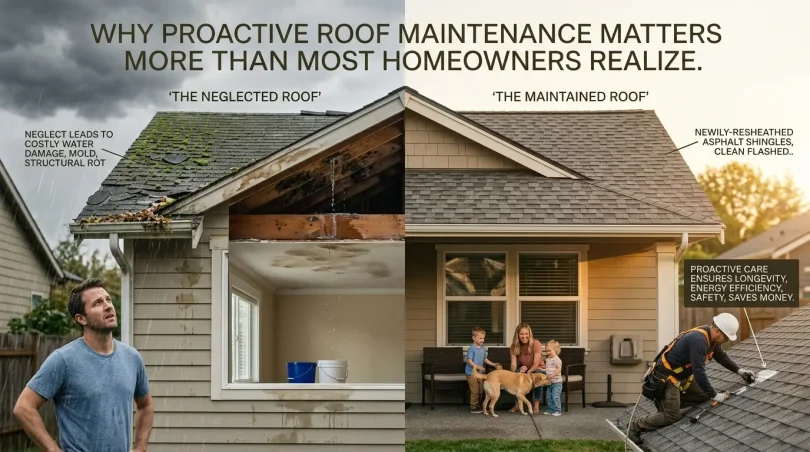

A roof is easy to forget about when everything appears to be working properly. There are no warning lights, no daily reminders, and no obvious signals that something is changing overhead. Yet roofing systems experience constant wear from weather, temperature fluctuations, moisture, and debris accumulation. By the time visible damage appears inside a home, the underlying issue has often existed for months.
For homeowners, understanding the value of preventive roof maintenance can help avoid expensive repairs, improve energy efficiency, and extend the lifespan of the entire roofing system. While many people only think about roofing during emergencies, regular attention to a roof’s condition can make a significant difference in long-term property protection.
The Hidden Costs of Delayed Roof Repairs
Minor roofing issues rarely stay minor for long. A small crack in flashing or a few damaged shingles can eventually allow moisture to penetrate beneath the roofing material. Once water reaches the underlayment or decking, the problem becomes far more expensive and complicated.
Homeowners often underestimate how quickly moisture damage spreads. Water intrusion can affect:
- Insulation performance
- Interior ceilings and walls
- Structural wood components
- Mold and mildew growth
- Electrical systems in attic spaces
Because many roofing problems develop gradually, homeowners may not notice them until visible signs appear indoors. Unfortunately, waiting for interior damage usually means the roofing issue has already escalated.
Routine inspections and early maintenance can identify vulnerable areas before major deterioration occurs. Addressing problems proactively is almost always more affordable than emergency restoration work.
Weather Exposure Takes a Year-Round Toll
Even in regions without harsh winters, roofing materials endure continuous environmental stress. Intense sun exposure, seasonal storms, humidity, and wind all contribute to gradual aging.
In warmer climates especially, prolonged ultraviolet exposure can dry out roofing materials over time. Asphalt shingles may become brittle, sealants can crack, and flashing materials may weaken. Heavy rainstorms can then exploit these weak points.
Wind is another major factor that homeowners frequently overlook. Strong gusts can loosen shingles, shift flashing, and create gaps that allow moisture infiltration. Sometimes storm-related roof damage is subtle enough to go unnoticed from the ground.
This is why many property owners choose to work with experienced local professionals who understand regional weather patterns and common roofing vulnerabilities. Homeowners researching maintenance strategies often review resources from companies such asIdeal Precision Roofing in San Antonio to better understand how climate-specific roofing care can impact long-term durability.
Why Roof Ventilation Is Often Overlooked
When people think about roofing, they usually focus on shingles or visible exterior materials. However, attic ventilation plays a major role in overall roof health.
Poor ventilation can trap heat and moisture inside attic spaces. Over time, this creates several problems:
- Increased indoor cooling costs
- Premature aging of roofing materials
- Condensation buildup
- Mold growth risks
- Reduced insulation effectiveness
Proper airflow helps regulate attic temperatures and prevents excessive moisture accumulation. A balanced ventilation system allows hot air to escape while bringing in cooler outside air through intake vents.
Many homeowners are surprised to learn that ventilation problems can shorten the life expectancy of an otherwise well-installed roof. Because ventilation issues are not always obvious, inspections can help identify whether airflow improvements are needed.
Gutters Play a Bigger Role Than People Think
Gutters are technically separate from the roof itself, but they are essential to roofing performance. Clogged or damaged gutters prevent water from draining properly, causing rainwater to pool near roof edges.
When drainage becomes restricted, several issues may develop:
- Fascia board deterioration
- Water seepage beneath shingles
- Foundation drainage problems
- Soil erosion around the property
- Increased risk of leaks
Leaves, branches, and debris buildup are common causes of gutter overflow. Seasonal cleaning helps maintain proper water flow and reduces unnecessary stress on roofing materials.
Downspouts also deserve attention. If water is not directed far enough away from the home, moisture problems can affect both the roofing system and the structure below.
The Value of Professional Roof Inspections
Some homeowners attempt visual roof checks from the ground, but many roofing problems are difficult to detect without close inspection. Trained professionals know how to identify early warning signs that may not be visible to the average property owner.
A professional inspection typically evaluates:
- Shingle condition
- Flashing integrity
- Ventilation performance
- Signs of water intrusion
- Structural concerns
- Gutter functionality
- Storm-related damage
Even roofs that appear visually sound may contain hidden vulnerabilities. Catching these issues early often prevents more extensive repairs later.
Scheduling inspections after major storms can also help identify damage before it worsens. In many cases, homeowners may not realize wind or hail has compromised certain roofing components until leaks eventually develop.
Roof Maintenance Helps Preserve Property Value
A roof is one of the most visible and important structural components of any home. Potential buyers often view roofing condition as a major indicator of overall property maintenance.
An aging or visibly damaged roof can negatively affect resale value and buyer confidence. In contrast, a well-maintained roofing system signals responsible ownership and reduces concerns about future repair expenses.
For homeowners planning to sell within the next few years, staying ahead of roofing maintenance can improve both curb appeal and marketability. Documentation of inspections and repairs may also provide reassurance to prospective buyers during the purchasing process.
Small Preventive Steps Can Make a Major Difference
Roof maintenance does not always require large-scale projects. In many cases, simple preventive measures can significantly improve long-term performance.
Helpful maintenance habits include:
- Removing debris from roof surfaces
- Trimming overhanging tree branches
- Cleaning gutters regularly
- Scheduling annual inspections
- Checking attic spaces for moisture signs
- Addressing minor damage promptly
These steps may seem minor individually, but collectively they help reduce long-term deterioration and support the overall integrity of the home.
Conclusion
Roofing systems quietly protect homes every day, yet they often receive little attention until problems become unavoidable. Proactive maintenance, routine inspections, and timely repairs can help homeowners avoid expensive damage while extending the lifespan of their roof.
Rather than waiting for visible leaks or structural issues to appear, taking a preventive approach allows homeowners to protect both their property and their long-term investment. Even small maintenance decisions today can help prevent major complications in the future.