
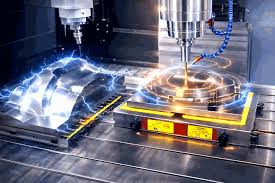

Modern manufacturing demands more than just skill; it demands precision that leaves no room for error. Whether you’re shaping aerospace components or crafting intricate medical devices, how you hold a workpiece matters as much as how you cut it. Traditional mechanical fixtures have long served the industry, but they come with limitations: uneven pressure, time-consuming setups, and potential surface damage.
This is where magnetic clamping steps in as a game-changer. Designed to deliver consistent, distortion-free holding force across an entire workpiece surface, magnetic systems are redefining what’s possible on the modern shop floor, faster, cleaner, and far more precise.
How Magnetic Clamping Works and Why Precision Manufacturing Demands It
At its core, magnetic clamping uses either permanent magnets or electromagnets to generate a powerful, evenly distributed holding force across a workpiece. Unlike mechanical clamps that apply pressure at specific contact points, magnetic systems grip the entire flat surface, eliminating localised stress and deflection.
This matters enormously in high-precision environments where tolerances are measured in micrometres. Even the slightest distortion during machining can render a component unusable.
1. Uniform Force Distribution Across the Workpiece Surface
Magnetic systems distribute holding force evenly, preventing the bending or warping that mechanical clamps often cause. This is particularly critical when machining thin or delicate parts.
2. Faster Setup and Reduced Changeover Time
Operators can secure a workpiece in seconds rather than minutes, dramatically cutting non-productive setup time. On high-volume production lines, this efficiency compounds into significant time savings.
3. Vibration Dampening During Cutting Operations
The broad surface contact of magnetic systems naturally absorbs machining vibrations, reducing chatter and improving surface finish quality on the final component.
4. Compatibility with Multi-Side Machining
Since the entire workpiece face is held magnetically, the sides, top, and edges remain fully accessible to cutting tools, enabling complex multi-face machining in a single setup without repositioning.
The Role of an Electromagnetic Clamp in Demanding Industrial Environments
An electromagnetic clamp operates by passing electrical current through coils to generate a magnetic field that locks the workpiece in place. The moment current is applied, the clamping force activates instantly and releases just as fast when the current is switched off. This controllability makes it ideal for automated manufacturing lines where speed and repeatability are non-negotiable.
Industries such as automotive, aerospace, and medical device manufacturing rely heavily on electromagnetic technology because it eliminates the human variability associated with manual tightening.
1. Instant Activation and Release for Automated Workflows
Electromagnetic systems integrate seamlessly with CNC machines and robotic workflows, enabling automated loading and unloading without manual intervention.
2. Consistent Clamping Force Every Single Cycle
Unlike mechanical systems that can loosen over time or vary between operators, electromagnetic clamps deliver identical force on every cycle, ensuring repeatable machining outcomes.
3. Safe Operation with Power Monitoring Features
Modern electromagnetic designs include safety features that monitor power continuity. If power is interrupted unexpectedly, built-in mechanisms help prevent workpiece release during active machining.
4. Reduced Operator Fatigue and Human Error
Automation-friendly clamping reduces the physical effort operators expend on fixturing, lowering fatigue and the risk of improper setups that compromise part quality.
Choosing the Right Magnetic Clamping System for Your Application
Selecting the correct magnetic clamping system requires careful consideration of workpiece material, weight, geometry, and the machining forces involved. Not every system suits every application; understanding the variables ensures optimal performance and safety.
Ferromagnetic materials respond directly to magnetic fields, while non-ferrous materials may require adapter plates or specialised pole configurations to achieve adequate holding force.
1. Assessing Workpiece Material and Geometry
Flat, ferromagnetic workpieces offer the best magnetic contact. Irregular geometries or non-magnetic materials may need additional fixturing strategies or dedicated adapters.
2. Matching Magnetic Force to Machining Load
Heavy cutting operations demand a higher magnetic holding force. Always consult load capacity specifications to ensure the system can safely withstand the forces generated during machining.
3. Evaluating Permanent Versus Electromagnetic Options
Permanent magnetic systems require no power during operation, making them energy-efficient and safe during power failures. Electromagnetic systems offer superior controllability for automated environments.
4. Integration with Existing Machine Tool Infrastructure
Ensure the chosen system is compatible with your machine tool’s control interface, especially if you plan to automate clamping and unclamping as part of a programmed machining cycle.
Understanding Magnetic Clamping Devices Across Different Machining Processes
Magnetic clamping devices are available in a wide range of configurations, each engineered for specific machining tasks, from surface grinding to milling, EDM, and turning. The diversity of available designs means manufacturers can find a solution tailored precisely to their process requirements.
Modular designs also allow businesses to adapt their clamping setup as production requirements evolve, protecting long-term investment.
1. Surface Grinding Applications
In surface grinding, magnetic devices provide the flat, vibration-free holding essential for achieving mirror-quality finishes. Even the slightest movement during grinding can ruin a workpiece.
2. Milling and High-Speed Cutting
For milling operations, devices engineered for high lateral force resistance ensure the workpiece stays firmly locked even under aggressive cutting conditions and directional tool loads.
3. Electrical Discharge Machining (EDM)
EDM demands exceptional precision and a completely stable workpiece. Magnetic devices offer the distortion-free holding that makes submicron-level EDM work achievable consistently.
4. Turning and Rotational Machining
Specialised magnetic chuck designs support turning operations by providing concentric, balanced holding for cylindrical or disc-shaped workpieces on lathe and turning centres. Pneumatic clamping is sometimes used alongside magnetic systems in turning setups for enhanced holding versatility.
How a Magnetic Clamping Plate Improves Workflow Efficiency on the Shop Floor
A magnetic clamping plate serves as the foundational interface between the machine table and the workpiece. It provides a clean, flat, magnetically active surface that simplifies fixturing while maximising the usable work area.
The practical advantages extend beyond holding force; these plates reduce fixture inventory, lower setup complexity, and help standardise processes across different operators and shifts.
1. Maximising Usable Work Envelope
Magnetic plates eliminate bulky mechanical clamps at the workpiece perimeter, freeing the entire work envelope for tooling access and enabling larger parts to be machined in one pass.
2. Simplifying Fixture Management and Storage
A single magnetic plate can replace dozens of dedicated mechanical fixtures, reducing storage requirements and simplifying fixture management across a busy production facility.
3. Enabling Rapid Batch Processing
Operators can load, machine, and unload workpieces rapidly, one after another, with consistent positioning accuracy, ideal for high-volume batch production where cycle time directly impacts profitability.
SCHUNK: Engineering Precision Clamping Solutions for Complex Manufacturing Challenges
When the question is how do you machine a component with micron-level accuracy?” or “how do you process micro-optical components no wider than a human hair? The answer lies in engineering expertise and intelligent toolholding solutions. SCHUNK brings that expertise to manufacturers worldwide.
SCHUNK specialists possess deep knowledge in toolholding, workholding, gripping technology, and automation technology. Beyond individual high-tech components, SCHUNK delivers intelligent complete solutions for robot systems and a wide variety of production and automation processes, all from a single source, tailored to individual customer applications. Whether it’s enabling the precise surface milling of hip implants or supporting complex assembly automation, SCHUNK connects advanced clamping technology with real-world manufacturing challenges, helping businesses achieve the precision their applications demand.
Conclusion
High-precision machining is unforgiving; every micron matters, and every setup decision has consequences. Magnetic clamping systems have earned their place at the heart of modern manufacturing because they address the fundamental challenges of workholding: consistency, speed, surface integrity, and accessibility.
From the even force distribution of a magnetic clamping plate to the instant controllability of an electromagnetic clamp, these systems make it possible to machine faster, more accurately, and with greater confidence. As manufacturing complexity grows and tolerance requirements tighten further, investing in the right magnetic clamping technology is not just a practical upgrade; it is a strategic necessity for any operation serious about precision and productivity.