
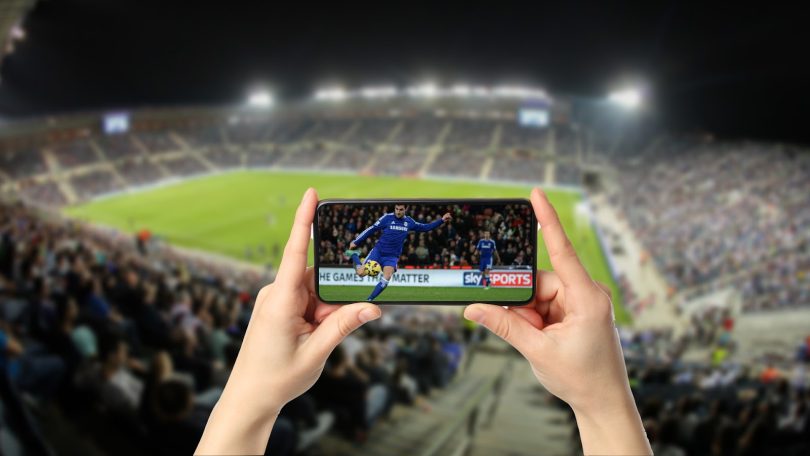

Live sports streaming now competes with broadcast TV in the moments that matter most – wickets, goals, buzzer-beaters – when millions hit play at the same time. That’s when delay, buffering, and sudden quality drops show up fast. 5G and edge computing are reshaping this experience by improving how video travels and where it’s processed. 5G boosts mobile capacity and responsiveness in crowded areas, while edge computing pushes delivery and compute closer to viewers, reducing long network hops. Together, they help streams start faster, stay sharper under load, and keep real-time features in sync with the action.
Why “live” delivery is hard: latency, congestion, and device limits
Live sports rarely happen on a single screen anymore. Many viewers keep an extra tab or phone open for stats, lineups, or betting-style updates, and that makes timing differences far more noticeable. It’s also why a live criket app running alongside a stream can highlight gaps between video and real-time information. When the ball is hit, the crowd reacts, and the score changes in one place but not the other. Viewers immediately feel the delay. That pressure is one reason platforms are investing in faster delivery paths rather than accepting a long buffer as “normal.”
Where delay actually comes from
Delay doesn’t start at the viewer’s phone. It stacks up across the chain. Cameras capture the action, then the feed is produced in a control room. Next comes encoding, which compresses video into streamable formats. The stream is packaged into segments, distributed through content delivery networks (CDNs), and buffered on the device to prevent stalling. Each step adds time, and each step can be tuned for either lower latency or higher stability.
Some services aim for ultra-low latency by using smaller segments and aggressive buffering policies. Others prioritize continuity, accepting more delay to reduce stutters. Neither approach is universally “right.” The best choice depends on audience size, network conditions, and the platform’s tolerance for interruptions.
What 5G changes in real life for streaming
5G is often marketed as “faster,” but for streaming, the more meaningful change is how well the network can serve many users in the same area. Higher capacity can help streams maintain higher bitrates during peak moments. That reduces the frequency of visible resolution drops, especially on phones and tablets that rely heavily on mobile data.
Lower radio latency and the role of scheduling
Latency on mobile networks isn’t only about raw speed. It’s about how fast the network responds and how efficiently it schedules traffic. 5G can improve response times, which supports lower-latency streaming profiles and more responsive interactive features. The stream still has to be encoded, packaged, and buffered. Yet when the network portion is tighter, the overall delay budget becomes easier to reduce.
In certain environments, 5G can support differentiated handling of traffic. For broadcasters and venues, that can mean better service reliability for production feeds or official data channels. For viewers, the benefits depend on how the network is configured and whether services can access those capabilities. It won’t automatically apply to every user on every carrier. But it opens the door to event-focused optimization.
Edge computing: bringing processing closer to the viewer
Edge computing shifts some of the work from distant cloud data centers to infrastructure located closer to users. For streaming, that can reduce the distance video segments travel before reaching a device. Shorter distance often means fewer opportunities for congestion and faster delivery of segments, which supports tighter latency targets.
Local caching also helps. If many people in a region are watching the same match, edge nodes can serve segments locally rather than pulling everything from a faraway origin. That reduces load on upstream networks and can make playback more consistent during spikes.
Edge-assisted encoding and packaging
In advanced setups, edge resources can assist with packaging and segment handling nearer to the viewer. This can cut time and reduce jitter when demand surges. It also supports more variants for adaptive bitrate streaming, helping the player switch smoothly between quality levels without pausing.
Modern sports streams are more than video. They include overlays, stats, and interactive panels. Those elements depend on accurate timing. Edge computing can help keep data and video aligned by reducing variability in delivery and enabling more responsive updates. When a platform can deliver video segments and data with less drift, the stream feels more coherent across devices.
New experiences: multi-angle streams, interactive stats, and AR layers
Multi-angle viewing requires delivering multiple feeds, which increases bandwidth and processing demands. Edge resources can help scale these features by serving feeds locally and reducing the burden on central infrastructure. This is one reason multi-view experiences are expanding beyond premium TV apps and moving into mobile.
Interactive timelines and highlights
Highlights are increasingly built from metadata – wickets, boundaries, key overs – that trigger clipping and fast publishing. When distribution is supported by edge infrastructure, highlight segments can appear sooner and play more smoothly even when many viewers tap them at once.
In-venue enhancements
Stadium Wi-Fi often struggles under heavy demand. 5G-backed venue services can reduce the dependence on overloaded Wi-Fi networks and support features like in-seat replays, live stats, and app-based experiences. The success depends on venue coverage and how well the network is engineered for large crowds.
What viewers should expect next and how to choose better setups
The earliest gains tend to show up as fewer quality drops and less buffering during peak moments. Latency can improve, but it’s still constrained by encoding choices and device buffering policies. Some apps prioritize stability over minimal delay, and some devices decode video more efficiently than others.
Platform design matters too. A service can have strong network infrastructure and still feel slow if it uses large segment sizes or conservative buffering. That’s why “5G” alone doesn’t guarantee a near-real-time experience. It’s one piece of a larger system.