
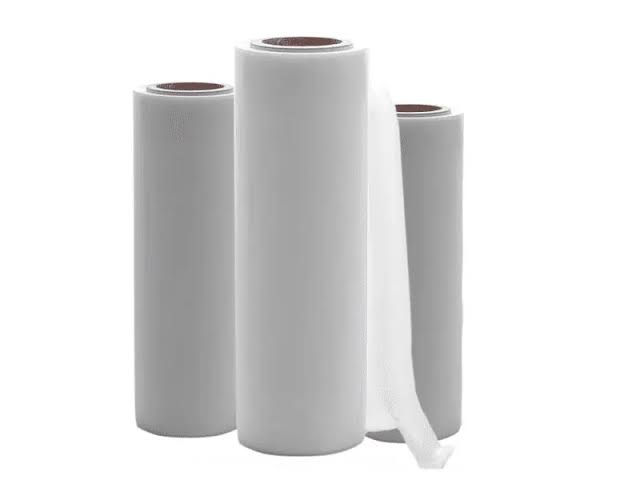

Modern industries increasingly require materials that provide reliable performance while supporting efficient processing and responsible product design. A wasserlöslicher Filmbildner is a material capable of creating a continuous, flexible, and uniform film that dissolves or disperses when exposed to water. These materials are widely used in packaging, paper coatings, adhesives, detergents, textiles, ceramics, agriculture, pharmaceuticals, and personal care products. Among the available options, pvoh has become particularly important because of its excellent film-forming ability, adjustable water solubility, strong adhesive properties, and compatibility with many industrial formulations.
Understanding Water-Soluble Film Formation
Film formation occurs when a dissolved or dispersed polymer is applied to a surface and the liquid portion gradually evaporates. As the water disappears, polymer molecules move closer together and create a continuous layer. A high-quality wasserlöslicher Filmbildner should produce a smooth film without cracks, uneven areas, or excessive stickiness. The finished layer may provide strength, protection, adhesion, or controlled release. When the film later comes into contact with water, it can dissolve or break down according to the chemical structure, thickness, temperature, and formulation of the material.
Why pvoh is Widely Used?
One of the most common materials used for water-soluble film formation is pvoh. It is a synthetic polymer produced through the hydrolysis of polyvinyl acetate. Its performance can be adjusted by changing its molecular weight and degree of hydrolysis. These characteristics influence viscosity, mechanical strength, flexibility, and dissolution temperature. This versatility allows manufacturers to select a grade suitable for a specific production process. As a wasserlöslicher Filmbildner, the polymer can create clear, strong, and relatively odor-free films that perform consistently across many applications.
Important Performance Properties
The effectiveness of a film-forming material depends on several properties. Good adhesion helps the film remain attached to paper, fabric, ceramic particles, or other surfaces. Tensile strength prevents premature tearing, while flexibility allows the film to bend without cracking. Transparency may be important for packaging and coating applications. A suitable wasserlöslicher Filmbildner must also offer controlled viscosity so that it can be pumped, sprayed, coated, or cast efficiently. pvoh can provide a useful combination of these properties, although its final performance depends heavily on the selected grade and formulation.
Applications in Water-Soluble Packaging
Water-soluble packaging is one of the most visible applications of film-forming polymers. Pre-measured cleaning products, laundry capsules, and industrial chemicals can be enclosed within films designed to dissolve during use. This reduces direct contact with concentrated ingredients and improves dosing accuracy. A wasserlöslicher Filmbildner used in packaging must provide sufficient strength during manufacturing, transportation, and storage. At the same time, it must dissolve effectively under the intended conditions. pvoh is frequently selected because its dissolution behavior can be adapted for cold, warm, or hot water applications.
Detergent and Cleaning Products
In the cleaning industry, water-soluble films allow manufacturers to offer convenient single-dose products. The outer film keeps the formulation contained until it is placed in water. Once exposed, the film dissolves and releases the active ingredients. This format helps users avoid spills and reduces the need to measure liquid or powder manually. The chosen wasserlöslicher Filmbildner must remain stable when in contact with the enclosed formulation. Manufacturers must carefully test compatibility with surfactants, enzymes, fragrances, and other ingredients. Moisture-resistant packaging is also essential during storage and distribution.
Paper, Textile, and Adhesive Uses
Film-forming polymers are also valuable in paper and textile processing. In paper coatings, they can improve surface smoothness, print quality, strength, and resistance to handling damage. In textile operations, they may be used as sizing agents to protect yarn during weaving. After processing, the temporary coating can be removed with water. pvoh is also used in adhesive formulations because it provides strong bonding performance on porous materials. As a wasserlöslicher Filmbildner, it can help create stable adhesive layers for paper products, labels, packaging components, and selected construction materials.
Ceramics and Construction Materials
Ceramic production often requires a temporary binder that holds particles together before firing. A suitable wasserlöslicher Filmbildner can improve the green strength of ceramic bodies and reduce breakage during shaping, drying, and handling. During later processing, the binder can be removed without permanently affecting the finished ceramic material. In construction applications, pvoh may be included in dry-mix products, coatings, joint compounds, and cement-based formulations. It can support adhesion, water retention, and workability, although dosage levels must be carefully controlled to achieve the desired performance.
Pharmaceutical and Personal Care Applications
Water-soluble films are increasingly used for unit-dose and delivery systems in pharmaceutical and personal care products. Thin films may carry measured amounts of active ingredients and dissolve when exposed to moisture. Film-forming materials can also appear in facial masks, hair products, skin-care formulations, and protective cosmetic coatings. In these applications, purity, safety, flexibility, and sensory performance are especially important. A wasserlöslicher Filmbildner must be selected according to relevant regulatory and quality requirements. Every ingredient should be evaluated for its intended use, exposure level, and compatibility with the complete formulation.
Formulation and Processing Considerations
Successful film production requires more than choosing the correct polymer. Water quality, mixing temperature, solution concentration, drying conditions, and storage humidity can all influence the result. pvoh normally requires controlled mixing to achieve complete dissolution without forming persistent lumps. Excessive heat or poor agitation may create an inconsistent solution. Plasticizers can be added to improve flexibility, while defoamers may control air bubbles. However, every additive can affect solubility and film strength. Therefore, a wasserlöslicher Filmbildner should always be tested in the complete formulation rather than evaluated as an isolated raw material.
Film thickness is another important consideration. A thicker film may provide greater strength but may require more time to dissolve. A thinner film may dissolve quickly but could tear during handling. Manufacturers must identify the correct balance based on the end use. Temperature and humidity should also be controlled because water-soluble polymers can absorb moisture from the surrounding air. Poor storage conditions may cause films to soften, stick together, or lose mechanical stability. Protective outer packaging can help maintain consistent quality until the product reaches the final user.
Environmental Considerations
Water solubility should not automatically be treated as the same as biodegradability. A material may disappear visually in water while remaining present in dissolved form. The environmental behavior of pvoh depends on its grade, concentration, disposal route, and local treatment conditions. Certain grades can be biodegraded by microorganisms under appropriate conditions, but performance may vary between environments. Companies using a wasserlöslicher Filmbildner should examine credible test data, wastewater treatment compatibility, and the complete life cycle of the product before making environmental claims.
Selecting the Correct Grade
The best material depends on the required solubility temperature, film strength, viscosity, clarity, flexibility, and production method. Partially hydrolyzed grades may dissolve more easily in colder water, while highly hydrolyzed grades can provide stronger water resistance under specific conditions. Molecular weight also influences solution viscosity and mechanical performance. Manufacturers should request technical data sheets, safety information, sample testing, and application support from suppliers. A dependable wasserlöslicher Filmbildner should deliver consistent quality between batches and remain stable throughout the intended storage period.
The Future of Water-Soluble Films
Demand for convenient dosing, reduced material waste, and innovative delivery systems is encouraging further development of water-soluble films. Future formulations may combine improved strength, faster dissolution, better humidity resistance, and more responsible end-of-life performance. Research is also focused on blends, functional additives, and application-specific polymer grades. pvoh is expected to remain an important material because its properties can be adapted to many industrial requirements.
A well-selected wasserlöslicher Filmbildner can improve product safety, processing efficiency, performance, and user convenience. However, success depends on choosing the correct polymer grade and carefully controlling formulation, production, packaging, and storage conditions. Through proper testing and responsible material selection, manufacturers can develop reliable water-soluble film solutions for a broad range of modern applications.