
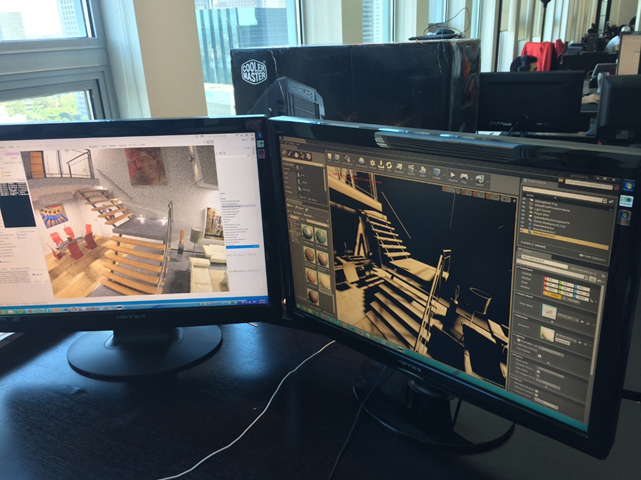
There was a time when seeing a finished frame meant waiting. You’d tweak a light, hit render, and go grab coffee while the machine worked through it. That workflow is disappearing fast. Directors want to see lighting changes happen live on an LED volume. Supervisors want to walk through a scene and adjust it on the spot instead of waiting for an overnight batch to come back with the answer.
Real-time rendering used to be something you associated with games, not film or broadcast work. That’s changed. Virtual production stages, live broadcast graphics, and pre-vis for major features all lean on it now, and the studios that adopted it early are the ones setting the pace the rest of the industry is trying to catch up to.
Why Real-Time Rendering Is Reshaping Production Pipelines
The appeal isn’t just speed for its own sake. When a director can see a lighting change instantly instead of waiting twenty minutes for a test render, decisions happen faster, and better ideas actually make it into the final shot instead of getting cut because there wasn’t time to try them. That shift changes how creative decisions get made on set, not just how long post-production takes.
The Hardware Behind Real-Time Workflows
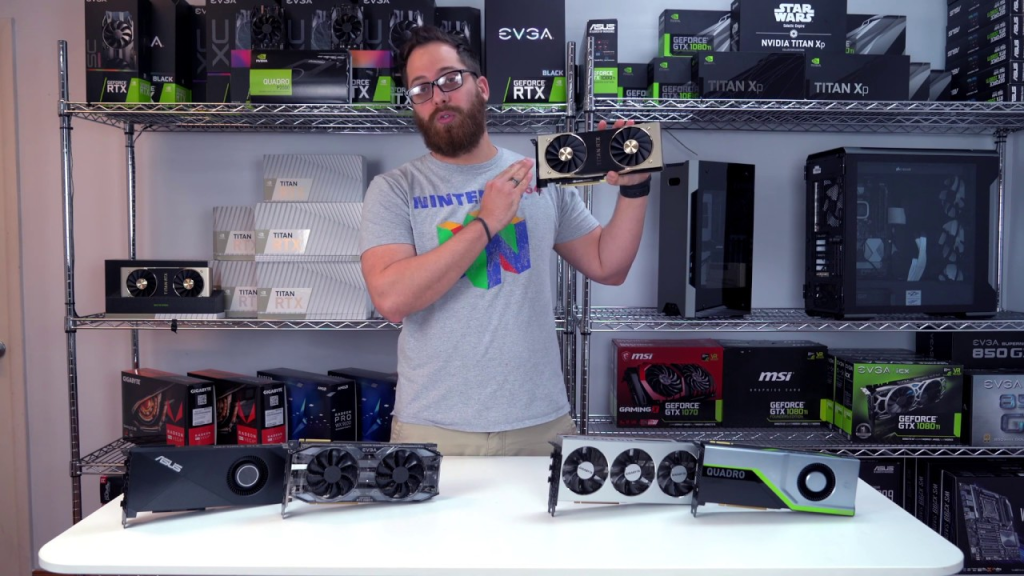
None of this works without GPU horsepower built for it specifically. A studio just getting into real-time pipelines, or running smaller virtual production setups, usually starts with something like an Octanerender Standard Edition Workstation – enough GPU muscle to handle live preview and interactive lighting without the cost of a full production-scale rig. It’s a sensible entry point for teams that are testing real-time workflows before committing a whole pipeline to it.
Real-time rendering asks something different of hardware than traditional offline rendering did. Offline rendering can tolerate a slow frame here and there, because nobody’s watching it happen live. Real-time work can’t tolerate that at all – a dropped frame or a stutter on an LED wall shows up immediately, in front of the whole crew, and that changes what “good enough” hardware actually means.
When Productions Need More Headroom
Larger productions push past what an entry-level setup can handle pretty quickly, especially once multiple departments are pulling from the same scene simultaneously. An OctaneRender and Ryzen workstation is built for that heavier load, pairing GPU rendering power with the CPU throughput that dense scenes and simulation-heavy shots actually need to stay responsive in real time.
This is usually the point where studios realize hardware planning can’t happen department by department. Real-time pipelines touch art, lighting, and on-set teams all at once, and a setup that only satisfies one of those groups tends to become the bottleneck for everyone else.
What Slows Real-Time Pipelines Down
When the hardware isn’t matched to the workflow, the cracks show up fast:
- Frame drops during live LED volume shoots that stall the whole crew
- Artists scaling back scene complexity just to stay interactive
- On-set decisions getting deferred to post because live previews can’t keep up
- Rendering teams stuck maintaining two separate pipelines, one real-time and one offline, instead of one
Any one of these is manageable on its own. Together, they tend to eat away at exactly the speed advantage real-time rendering was supposed to deliver in the first place.
Planning for Real-Time at Scale
Studios that get real-time pipelines right usually don’t buy hardware once and call it done. They treat it as something that scales alongside project complexity – starting with workstations sized for early testing, then expanding to match production once real-time work becomes part of the standard pipeline rather than an experiment. Waiting until a big production is already underway to figure this out tends to be a lot more expensive than planning for it early.
Final Thoughts
Real-time rendering isn’t a passing trend in high-end visual production anymore – it’s becoming the standard that clients and directors expect. Studios that invest in hardware built specifically for real-time workflows, rather than repurposing gear meant for offline rendering, tend to be the ones actually delivering on that expectation. That’s the gap Cloud Ninjas builds its workstation lineup to close.