The electronics industry continues to evolve rapidly, with companies facing increasing pressure to develop innovative products while reducing costs and shortening production timelines. Managing multiple suppliers for PCB fabrication, component sourcing, assembly, testing, and logistics can be challenging and time-consuming. To simplify the manufacturing process, many businesses are turning to turnkey PCB assembly solutions.
Turnkey manufacturing offers a streamlined approach that allows companies to outsource the entire PCB production process to a single provider. From procurement and fabrication to assembly and testing, turnkey services help improve efficiency, reduce risks, and accelerate product development. Understanding how turnkey PCB assembly works can help businesses make informed decisions when selecting a manufacturing partner.
What Is Turnkey PCB Assembly?
Turnkey PCB assembly is a comprehensive manufacturing solution in which a single supplier manages every stage of the PCB production process. Instead of coordinating multiple vendors, customers provide design files and product requirements while the manufacturer handles the remaining tasks.
A turnkey provider typically manages:
- PCB fabrication
- Component procurement
- Inventory management
- PCB assembly
- Quality inspection
- Testing
- Packaging
- Logistics and delivery
This integrated approach allows customers to focus on product design, marketing, and business growth while the manufacturing partner oversees production.
How Turnkey PCB Assembly Works
The turnkey process is designed to simplify project management and ensure seamless production.
Design File Submission
The process begins when the customer submits manufacturing documentation, including:
- Gerber files
- Bill of Materials (BOM)
- Assembly drawings
- Pick-and-place files
- Testing requirements
Engineers review these files to verify manufacturability and identify potential issues before production begins.
Component Sourcing
One of the most important aspects of turnkey PCB assembly is component procurement. The manufacturer sources all required parts from approved suppliers and authorized distributors.
This centralized sourcing process helps reduce procurement complexity and ensures component availability and traceability.
PCB Fabrication
After sourcing components, the manufacturer fabricates the printed circuit boards according to project specifications. Depending on the design, boards may be single-sided, double-sided, multilayer, rigid, flexible, or rigid-flex.
Strict quality controls are implemented throughout fabrication to ensure dimensional accuracy and electrical performance.
PCB Assembly
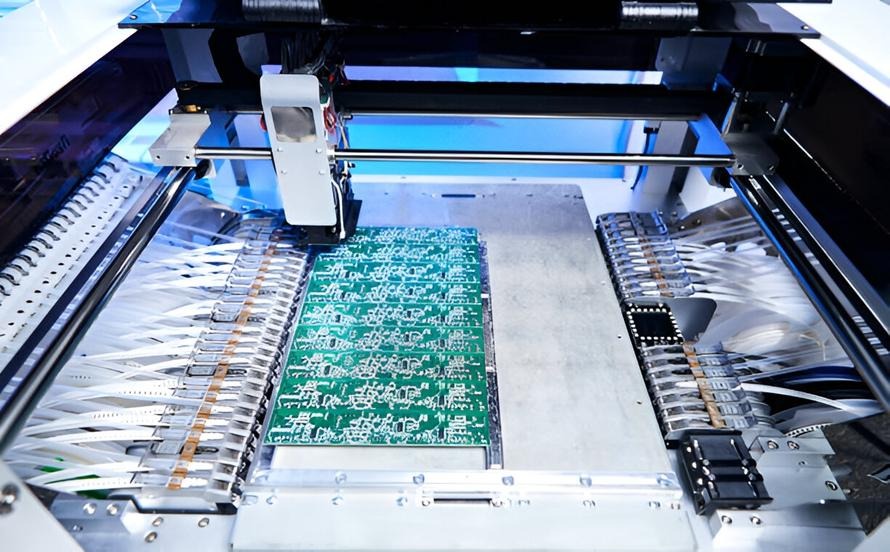
Once fabrication is complete, electronic components are mounted onto the PCB using Surface Mount Technology (SMT), Through-Hole Technology (THT), or mixed assembly processes.
Automated assembly equipment ensures high placement accuracy, repeatability, and production efficiency.
Inspection and Testing
Quality assurance is a critical part of turnkey PCB assembly. Manufacturers use various inspection and testing methods to verify assembly integrity and functionality.
Common procedures include:
- Automated Optical Inspection (AOI)
- X-ray Inspection
- In-Circuit Testing (ICT)
- Functional Testing
- Flying Probe Testing
These processes help detect defects and ensure reliable product performance.
Packaging and Delivery
After final approval, assembled products are packaged and shipped according to customer requirements. Many turnkey providers also offer inventory management and scheduled delivery programs.
Benefits of Turnkey PCB Assembly
The popularity of turnkey PCB assembly continues to grow because of the numerous advantages it offers.
Simplified Project Management
Working with a single supplier eliminates the need to coordinate multiple vendors. This reduces communication challenges and simplifies overall project management.
Faster Time to Market
Integrated manufacturing processes reduce delays between fabrication, sourcing, assembly, and testing. Faster production cycles help companies bring products to market more quickly.
Cost Efficiency
Turnkey providers often benefit from established supplier relationships and purchasing power, which can result in lower component costs and reduced overall manufacturing expenses.
Improved Quality Control
Because all production stages are managed by one organization, quality control procedures can be implemented consistently throughout the manufacturing process.
Reduced Supply Chain Risks
Managing multiple suppliers increases the risk of delays, shortages, and communication errors. Turnkey manufacturing centralizes procurement and logistics, helping reduce supply chain complexity.
Better Production Visibility
Many turnkey manufacturers provide real-time project updates and production tracking, giving customers greater visibility into manufacturing progress.
Full Turnkey vs. Partial Turnkey PCB Assembly
Turnkey services can be customized based on project requirements.
Full Turnkey Assembly
In a full turnkey arrangement, the manufacturer handles every aspect of production, including component sourcing, fabrication, assembly, testing, and delivery.
This option offers maximum convenience and is ideal for companies seeking a fully outsourced manufacturing solution.
Partial Turnkey Assembly
With partial turnkey assembly, customers may supply certain components while the manufacturer manages the remaining procurement and assembly processes.
This approach provides greater flexibility while still benefiting from many advantages of turnkey manufacturing.
Applications of Turnkey PCB Assembly
Turnkey PCB assembly is widely used across numerous industries because it simplifies production and supports complex electronic products.
Consumer Electronics
Manufacturers of smartphones, tablets, smart home devices, wearable technology, and entertainment systems often rely on turnkey solutions to accelerate product launches.
Medical Devices
Medical electronics require strict quality control, regulatory compliance, and traceable component sourcing. Turnkey manufacturing helps meet these demanding requirements.
Automotive Electronics
Modern vehicles contain numerous electronic systems, including sensors, control units, infotainment systems, and safety technologies. Turnkey providers help ensure reliability and production consistency.
Industrial Automation
Industrial equipment manufacturers use turnkey assembly to produce control systems, robotics, monitoring devices, and automation technologies efficiently.
Telecommunications
Networking equipment, communication infrastructure, and wireless technologies require complex PCB assemblies that benefit from integrated manufacturing solutions.
Factors to Consider When Choosing a Turnkey PCB Assembly Provider
Selecting the right manufacturing partner is critical for project success.
Manufacturing Capabilities
Evaluate whether the provider can support your required technologies, board types, component packages, and production volumes.
Supply Chain Management
Strong supplier relationships and component sourcing expertise help reduce procurement risks and improve delivery reliability.
Quality Certifications
Look for manufacturers with certifications such as ISO 9001, IPC standards compliance, ISO 13485 for medical devices, or IATF 16949 for automotive applications.
Engineering Support
Experienced engineering teams can assist with design optimization, Design for Manufacturability (DFM), and troubleshooting throughout product development.
Testing Capabilities
Comprehensive inspection and testing services help ensure product quality and long-term reliability.
Future Trends in Turnkey PCB Assembly
As electronic products become increasingly complex, turnkey manufacturing continues to evolve.
Automation, artificial intelligence, and smart factory technologies are improving production efficiency, reducing defects, and enhancing quality control.
Digital supply chain management systems are providing greater transparency and helping manufacturers respond more effectively to component shortages and market fluctuations.
Sustainability initiatives are also encouraging manufacturers to adopt environmentally friendly materials, lead-free assembly processes, and energy-efficient production methods.
These advancements are making turnkey solutions more attractive for businesses seeking reliable and scalable manufacturing services.
Conclusion
Turnkey PCB assembly provides a comprehensive and efficient solution for modern electronics manufacturing. By consolidating PCB fabrication, component sourcing, assembly, testing, and logistics under a single provider, companies can simplify project management, reduce costs, improve quality, and accelerate time to market. Whether developing prototypes or managing large-scale production programs, partnering with an experienced turnkey PCB assembly service can help ensure reliable manufacturing, streamlined operations, and long-term product success.