
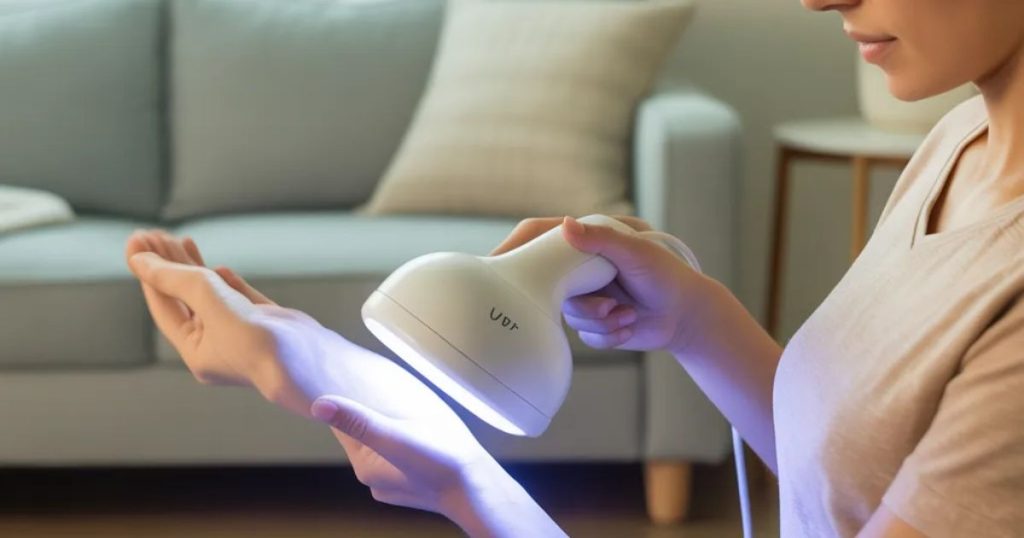
The management of chronic psoriasis skin symptoms has been introduced as an important dermatological intervention using UV light. Psoriasis is a condition that many individuals experience, characterised by redness, thick plaques, scaling, and itchiness. Ultraviolet B phototherapy is one of the most well-known, clinically proven methods for alleviating these symptoms without excessive medication use.
Awareness of the interaction between UV light and psoriasis can prompt people to investigate safe and effective treatment methods. UVB phototherapy is often prescribed by dermatologists due to its ability to slow abnormal skin cell growth and alleviate inflammation in psoriasis plaques. With advances in technology, patients can now receive UV light treatment for psoriasis at home with proper guidance, making the treatment more convenient and consistent.
Understanding Psoriasis and Its Symptoms
Psoriasis is a long-lasting autoimmune skin disorder that leads to the fastening of skin cells. Normally, skin cells regenerate every 28-30 days, and in psoriasis, this process may accelerate to a few days, resulting in thickened plaques and scaling.
Common symptoms include:
- Red patches of inflamed skin
- Silvery scales and flakes
- Dry or cracked skin
- Pruritus or burning.
- Scalp, trunk, elbows, knees, thick plaques.
The symptoms are due to overproduction of skin cells and inflammation caused by overactive immune responses. This abnormal process is meant to be regulated by UV light therapy.
What Is UV Light Therapy for Psoriasis?
Phototherapy, or UV light therapy, is a medical intervention that uses a controlled amount of ultraviolet light to treat the skin. UVB phototherapy is the most widely used type of phototherapy for psoriasis, and it involves penetration into the skin and the elimination of excessive skin cell growth.
The therapy works by:
- Shrinking inflammation in the affected layers of skin.
- Reducing the rate of skin cell proliferation.
- Reduction of scaling, erythema, and plaque thickness.
Phototherapy is typically administered in dermatology clinics using specialised light cabins or targeted lamps. Nevertheless, UVB phototherapy equipment can also be used by other patients at home under the prescription of medical professionals.
Types of UV Light Used for Psoriasis Treatment
There are two psoriasis treatments that involve ultraviolet light.
Narrowband UVB Therapy
The most common recommended treatment is narrowband UVB. It emits light at a wavelength of 311-313 nm, which helps treat psoriasis more effectively.
Benefits include:
- The acceleration of the psoriasis plaques.
- Fewer treatment sessions.
- Less likely to cause skin irritation as compared to older techniques.
Broadband UVB Therapy
Broadband UVB employs a larger spectrum of UV. It was in use historically, preceding the adoption of narrowband technology as the standard. Although still effective, it might require additional sessions and may cause slightly more skin irritation.
How UVB Phototherapy Works on Psoriasis
The correlation between UV light and psoriasis treatment is grounded in UV light’s biological effects on the skin.
The UVB light assists in the following ways:
- Reducing Skin Cell Proliferation – The growth rate of Psoriasis increases. UVB reduces this process and helps flatten the plaques.
- Lessening Inflammation – UV light inhibits the inflammatory body immunity in the skin.
- Immune Response– UVB treatment is beneficial in regulating abnormal immune responses that cause psoriasis.
- Enhancing Aesthetic Skin – Scaling and redness decrease, resulting in clearer skin.
Several weeks of regular therapy give many patients a feeling that they are getting better.
Benefits of UV Light Therapy for Psoriasis
Compared with other psoriasis treatments, UVB phototherapy offers several benefits.
Drug-Free Treatment Option
UV light therapy does not involve systemic medications; it can be utilised by individuals who prefer non-pharmacological treatment.
Less Reliance on Steroids
To reduce reliance on topical corticosteroids or oral medications, many patients opt for UVB therapy.
Long-term Management of Symptoms
UVB therapy, when used properly, may be safe for long-term management of psoriasis.
Efficacy in Multiple Psoriasis
Plaque psoriasis, guttate psoriasis, and extensive involvement are usually treated with UVB.
How UVB Light Therapy Is Used at Home
Home UVB phototherapy units have also been implemented in modern dermatology, allowing patients to administer treatments in the comfort of their homes. These machines produce regulated ultraviolet light like that in the clinic.
Common home therapy interventions involve:
- Two or three treatment sessions per week.
- Exposure time ranges from 30 seconds to several minutes, depending on skin type and dosage schedule.
- Specific areas are targeted: arms, legs, or torso.
Handheld UVB lamps are particularly useful for treating small patches of psoriasis on the elbows, knees, or scalp. Consistency is essential for effective results.
Treatment Duration and Expected Results
UVB phototherapy typically follows a systematic course of treatment.
General timelines include:
- The sessions were conducted two or three times a week.
- Clinical up to 10-week treatment programmes.
- Slowly increase exposure time to avoid skin irritation.
Many patients experience:
- Less erythema and inflammation.
- Flattened plaques
- Smoother skin texture
The results can come after a few weeks, though the response time differs with the severity.
Natural Sunlight vs Medical UVB Therapy
Many individuals report that their psoriasis improves in sunny weather. This is because sunlight contains ultraviolet radiation.
Nevertheless, UVB phototherapy by medical means is the preferred option since:
- It is controlled and accurately exposed.
- Dermatologists can adjust the dosage.
- It limits the possibility of skin damage or sunburn.
Natural light contains UVA and UVB rays, though UVB is the most effective for treating psoriasis.
Who Should Consider UV Light Therapy for Psoriasis?
UVB phototherapy can be advised to people who:
- Experiences moderate psoriasis on wider parts of the body.
- Does not respond to topical procedures.
- Prefer non-systemic treatment options
- Has a long-term symptom management requirement.
Dermatologists usually prescribe UVB therapy when topical creams fail to manage psoriasis.
Conclusion
Understanding the relationship between UV light and psoriasis enables patients to discuss effective therapies. UVB phototherapy has penetrated to the extent of decreasing inflammation, retarding skin cell growth, and improving the skin’s aesthetic look.
Whether in a clinic or using home UVB phototherapy equipment, this is a convenient, drug-free approach to managing psoriasis symptoms. With appropriate guidance and regular employment, several patients can achieve observable improvement and better management of their condition.