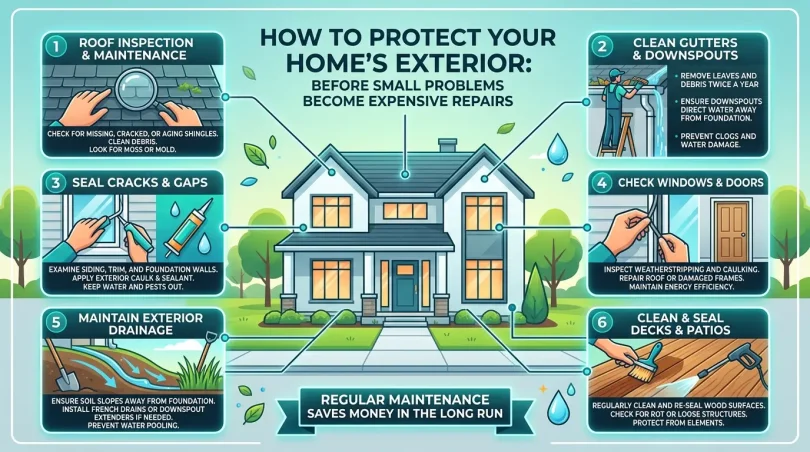

Your home’s exterior works hard every day. Roof shingles, gutters, siding, flashing, and trim all help keep moisture out and comfort in. With a little planning, homeowners can catch early warning signs before they turn into major repair projects.
Why Exterior Maintenance Matters
A well-maintained exterior does more than improve curb appeal. It protects the structure behind the walls, supports energy efficiency, and helps prevent water from reaching places it should never go.
Roofs and exterior systems are especially important in areas that experience heavy rain, wind, heat, humidity, or seasonal storms. Even a small leak can spread quietly into decking, insulation, drywall, or framing. By the time stains appear indoors, the original problem may already be larger than expected.
That is why exterior maintenance should be viewed as prevention, not just repair.
Start With a Simple Roof Check
You do not need to climb onto the roof to notice possible issues. In fact, most homeowners should inspect from the ground and leave close-up evaluations to trained professionals.
Look for:
- Missing, cracked, or curling shingles
- Dark streaks or uneven roof color
- Sagging areas along the roofline
- Loose flashing near vents, chimneys, or skylights
- Granules collecting near downspouts
- Water stains on ceilings or attic surfaces
These signs do not always mean a full replacement is needed, but they do suggest the roof deserves attention. A timely repair can often extend the life of the system and prevent moisture from spreading.
Do Not Ignore Gutters and Drainage
Gutters are easy to overlook until they fail. Their job is simple: move water away from the roof, siding, landscaping, and foundation. When gutters clog, sag, leak, or pull away from the fascia, water can spill into areas that are not designed to handle constant moisture.
Check gutters after major storms and during leaf-heavy seasons. Watch for overflowing water, soil erosion near the foundation, and mildew around lower siding. Downspouts should direct water several feet away from the home whenever possible.
If your gutters are frequently clogged or damaged, the issue may not be just cleaning. Poor slope, undersized gutters, loose fasteners, or damaged fascia can all affect performance.
Siding and Trim Deserve Attention Too
Siding protects the walls beneath it, while trim seals vulnerable transitions around windows, doors, corners, and roof edges. Over time, exterior materials can crack, warp, fade, separate, or develop gaps.
Pay attention to areas where different materials meet. These seams are common entry points for moisture. Peeling paint, soft wood, bubbling surfaces, or recurring mildew can point to trapped water.
A good exterior maintenance routine includes checking:
- Window and door trim
- Siding seams and corners
- Fascia and soffit boards
- Exterior caulking
- Paint or coating condition
- Areas near decks, patios, and landscaping
Small repairs in these areas can help prevent larger structural problems later.
When Storm Damage Is Not Obvious
Storm damage is not always dramatic. A roof can look mostly normal from the ground while still having lifted shingles, bruised materials, loosened flashing, or compromised seal strips. Wind-driven rain can also expose weak points that were not causing problems before.
After strong storms, homeowners should document anything unusual, including fallen branches, missing shingles, dented gutters, or new leaks. It may also be helpful to schedule a professional inspection, especially if nearby homes had visible damage.
For homeowners who want experienced help evaluating roofing, gutters, siding, or storm-related concerns, it can make sense tocontact Ideal Roofing and Exteriors as part of the decision-making process.
Build a Seasonal Maintenance Routine
Exterior care becomes easier when it is scheduled instead of rushed. A simple seasonal plan can reduce surprises and help homeowners stay ahead of wear and tear.
Spring
Inspect for damage after winter weather. Clean gutters, check roof edges, and look for water stains in the attic or upper rooms.
Summer
Watch for heat-related wear, cracked sealants, and ventilation issues. This is also a good time to address painting, siding, or trim repairs.
Fall
Remove leaves from gutters and valleys. Trim nearby branches and confirm that downspouts are ready for heavier rainfall.
After Major Storms
Walk the property, photograph visible damage, and note any leaks or debris impact. Avoid climbing onto wet or damaged surfaces.
Choosing the Right Exterior Contractor
A reliable contractor should do more than offer a quick quote. They should explain the condition of your home, recommend practical options, and communicate clearly before work begins.
Look for a company that provides:
- Clear inspections and written recommendations
- Experience with roofing and exterior systems
- Proper licensing and insurance where required
- Transparent project timelines
- Quality materials suited to local weather
- A workmanship-focused approach
- Respect for cleanup and property protection
The lowest price is not always the best value. Exterior work affects the long-term protection of the home, so workmanship, communication, and accountability matter.
Conclusion
Protecting your home’s exterior starts with awareness. By checking the roof, gutters, siding, trim, and drainage systems regularly, homeowners can catch problems early and make more confident repair decisions.
A home does not need constant major upgrades to stay protected. It needs consistent attention, timely maintenance, and the right professional support when issues go beyond a simple visual check.